




Hotels.com & WelcomeRewards Drops In My Lap

No Gravatar

Evidence of the health of the loyalty marketing business is that my list of subjects to write about grows faster than I can type.

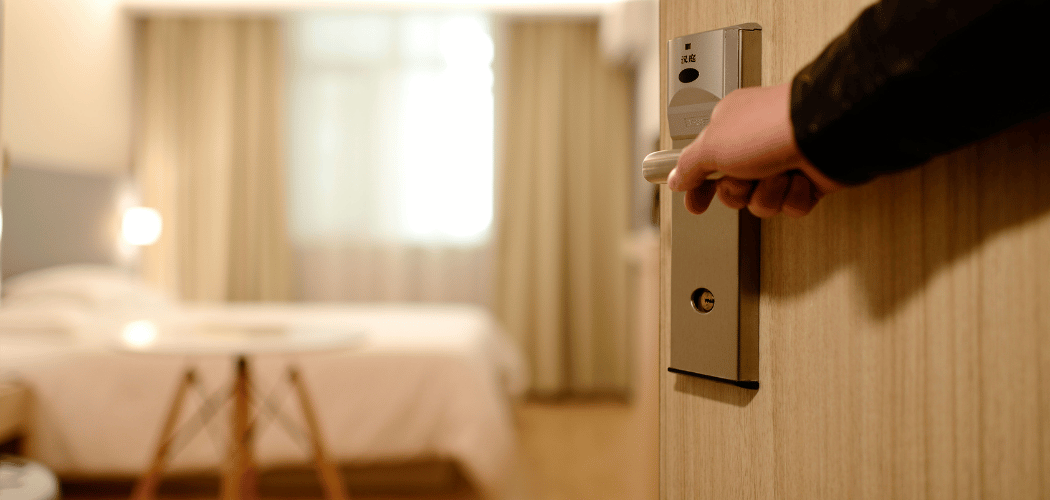
Yesterday, as I picked up the USA Today slipped under the door in my NY hotel room, a glossy 8 1/2 x 11 flyer fell in my lap and changed my blogging plans for the day.

“It’s Like Joining EVERY Hotel Loyalty Program. Except, it’s only one.” was the message. Flipping the piece over, the offer was clear: book  and stay 10 nights using Hotels.com and earn 1 free night at any of the 60,000 hotels offered through the site worldwide. Better yet, signing up for the WelcomeRewards™ challenge offered the chance to win 2 bonus nights over the course of 30 total nights booked.

The punch card might be the oldest loyalty tactic in town, but it works well for Southwest Airlines and for Hotels.com. I did a quick comparison and the simplified approach is not too far away from the basic value promised by traditional hotel loyalty providers Marriott and Intercontinental Hotels Group. For example, if a member of Marriott Rewards or Priority Club stays 10 nights at one of their respective properties with average room rate of $100, a free night is on the radar.

I know that Marriott and IHC offer multiple ways to boost earnings and have much more sophisticated programs overall, but for the budget driven traveler, joining WelcomeRewards™ is not a bad deal.

Interesting to me is that the program was launched in July 2008 but has had low visibility in the consumer eye. Also, given that Hotels.com is an operating company of Expedia, I wonder why the ThankYou! Rewards currency that Expedia uses wasn’t extended over to this brand.

WelcomeRewards™ comes with a few conditions (a/k/a the Loyalty Asterisk™), specifically:

  • Rewards may be redeemed at “eligible” hotels, but I could not find that term defined on the web site
  • The maximum value of a free night can’t exceed the average daily rate of the 10 nights used to earn the reward. You can however, choose to pay the difference if you really want to stay at a higher priced property
  • Taxes, fees, meals, incidentals and any “other costs associated with the booking” are not covered by the free night
  • Each loyalty credit is valid for three (3) years from date earned
  • The program may be terminated by Hotels.com at any time

Summing it up, the flyer that dropped in my lap reminded me why brands continue to choose data-driven incentive (Loyalty) programs to engage and retain customers. Far too many people that I have heard from are using travel aggregator sites like Hotels.com and Expedia to shop around and then login to their frequent guest account at the airline or hotel chain of their choice to book reservations.

To break the habit, Hotels.com had to do something and WelcomeRewards™ is an easy to understand program that delivers sufficient value change a few consumer minds.

Tags: , , , , , , , , , , ,

View Comments

Progressive Insurance Uses The Little L for Loyalty

No Gravatar

Auto insurance is not the most sexy purchase you can make as a consumer. It’s one of those “must have’s” and often its hard to differentiate the pros and cons between major insurers to make a decision.

I’ve admired the advertising creativity from Allstate and Progressive over the past year or so. Dennis Haysbert has put an incredibly trustworthy and down to earth face on Allstate’s brand and their ads have ranged from serious to funny, all effective in their own way to communicate Allstate’s brand promise.

And, who doesn’t like ditsy Flo, the Progressive girl, complete with her tricked-out name tag?

State Farm, the biggest of these competitors has been strangely quiet. Big Red offers not only insurance but banking and investment services through their State Farm Bank group, but for some reason has kept their light, comparatively speaking, under the bushel basket.

Progressive has launched a new campaign to pitch Loyalty in the past month and I’ve seen splashy print ads in USA Today and ESPN The Magazine touting “We Like Long Term Relationships”  and announcing rewards for new and existing customers alike.

I have to smile when any big brand chooses to put the “L” word front and center in their advertising. Customer Loyalty remains front and center with customer facing businesses, large and small and there is growing realization that growing a satisfied customer base and keeping them around for an extended time drives fundamental business and shareholder value.

I also have to let you know that Progressive’s program is a Loyalty program with a little “L”, and deserves a smallish Loyalty Asterisk™ for its manner of expressing its value proposition to consumers (i.e. calling benefits commonly offered across competitors a Loyalty program). Dig in to their web copy and you will see that they offer a myriad of tenure based and other discounts, not unlike what Allstate has been touting for the past few years and a similar package to those I have earned with State Farm, having been a client for over 25 years.

The difference? Progressive is the only of the top 3 insurers to use the “L” word and as such, makes it so.

The range of options to execute a Customer Strategy to develop and nurture brand loyalty has never been greater. They have always existed, but with points-fatigue on the rise and consumers demanding transparency and value, every brand should evaluate the Big L and the Little L as they form up a go-to-market plan.

That’s the best way to get yourself a tricked-out Loyalty program.

Tags: , , , , , , , ,

View Comments

Dick’s No Sweat Protection Plan – A Classic Loyalty Asterisk

No Gravatar

These days, it seems that consumers can’t buy a major appliance, personal computer, or big screen television without being offered an extended warranty.

The irony in the sales pitch is that talking points from store personnel leading up to the purchase decision are centered on the high quality of the item being considered for purchase.  Once that decision is made, whoosh, the chatter morphs to emphasize the need for a “consumer protection plan” to shield you from any number of consequences – especially manufacturers defects.

Most major appliances and consumer electronics are sold with a one year manufacturers warranty, hence the evolution of sales pitch from quality to protection communicates a (wink-wink) message that, despite the advertised quality of the product, you are rolling the dice that it will function as intended beyond one year. If there was ever a better example of fear-based selling, I can’t think of one.

I’ll leave the full analysis of when it makes sense to buy extended warranties to Consumer Reports and others who have more time on their hands. I do instinctively know that the lower the price and more disposable the item, the less it makes sense to buy a protection plan. It’s interesting to observe how some products like computer printers have devolved into this category as prices have come down, repair costs have skyrocketed and new technology is plentiful. Rather than buying a printer warranty, your money would be better spent buying discounted print cartridges!

Long ago, I added added Extended Warranty Plans to the list of Loyalty Asterisks™ in the market today. As a brand, you should be careful to monitor the presence of the Loyalty Asterisk™ in your marketing mix as they throw up barriers making long term customer loyalty tougher to achieve by creating mistrust and diluting value.

Always shopping with a cautious eye towards these plans, I was gripped by signage in Dick’s Sporting Goods offering Footwear Coverage.  As the copy read, I was being offered “Added protection from failures due to defects in materials and workmanship, including those experience during normal wear and tear.”

If you are asked to make a list of popular multi-line sporting goods stores, only a few come to mind. My list would include Sports Authority, Dicks, and Modell’s. Though they have similar inventory, store layouts, and staff knowledge on the floor, each chain has its own personality and Dicks has been my favorite of the three. I’ve also been running since I was 15 and am convinced that it is wise to replace running shoes every 400-500 miles to improve performance and avoid injury. Depending on your running volume, that equates to 2 pairs of new running shoes per year for anyone training for more than a dog walk.

That said, the idea of a consumer protection plan for running or any other athletic shoes is just plain mad. Dick’s announced the warranty coverage in February 2009 and while it makes more sense for high priced treadmills, it’s value is questionable for expendables such as shoes. Readers of Runner’s World seem to agree.

Dick’s offers ScoreCard Rewards, a basic rewards program that delivers about a 3% deferred discount (spend $300 get $10). With consumers seeking transparency and value in the retail shopping experience these days, the offer of a clearly suspect extended warranty product undermines the “loyalty” that Dick’s is seeking to achieve with ScoreCard Rewards.

Consumers keep score on the sum total of offers made by retailers and ultimately evaluate brand worth on a holistic level. Now that’s something to mark down in your retail playbook!

Tags: , , , , , , , , , , ,

View Comments

Defusing Airline Frustration In A Word: Communication

No Gravatar

Steven Slater is a blogger’s dream. For anyone looking for that quirky story to opine about, Mr. Slater provided a remarkable set of actions that will earn him a bit more than 15 minutes of fame. In fact, I’ll bet the incident that took place this week on Jet Blue flight 1052 from Pittsburgh to JFK will be cited in serious business circles over the next year as some form of turning point in improving the commercial airline travel experience.

Let’s be clear. It is not acceptable for a customer facing employee, whether flight attendant, service write-up person, or cashier to lose control and address others with anger and profanity. The world is a frustrating place but my Dad used to remind me “the veneer of civilization is paper thin”. In other words, we have to maintain control no matter the circumstances.

On the other hand, flying commercially is becoming more tortuous by the day. The restrictions that the airlines deem necessary negatively impact the flight experience and, rather than the intended compliance, are bringing out the worst in many people.

It seems the more travelers are charged for things that used to be free and the less freedoms we enjoy in flight, the more rebellious that paying customers seem to become. Our sense of entitlement is being threatened and we don’t like it. The offending passenger on Mr. Slater’s flight, by all reports, was truly offensive and anyone of us that endures business travel can attest to the selfish, rude, and flat out ignorant behaviour displayed by many passengers these days.

Toddlers learn quickly that ignoring rules and responding with extreme petulance draws further punishment. Mr. Slater executed his own version of a smack down and essentially threw his entire flight into “time out”. Not good, but he certainly delivered his message.

In my opinion, the airlines could defuse frustration for all parties on board simply through improved communications.

I have always wondered if using my cell phone in flight “really” impacts flight operations. Now it seems that placing your mobile device in airplane mode is not enough as we are constantly reminded to “turn everything with an on/off switch into the off position”. I guess Apple wasted its time designing that feature for its iPhone.  Posting simple explanations of policies that impact passengers would go a long way to soothing flyer nerves.

The biggest opportunity for airlines to create goodwill with their customers is to make compliance with TSA’s Secure Flight Program a breeze. If you are not familiar with the requirements of Secure Flight, read here.

I have received notice of my need to comply from several airlines via emails and in newsletters. JetBlue published a link in an email addressing the topic but I challenge you to find further reference to the topic on their website. Delta currently requires passengers to change the name of their SkyMiles accounts in writing and to provide “legal documents” as support.

I’d rather send them my legal name that matches my passport and redeem 10,000 miles for them to make the change, not that they would ever consider making it this easy.

Neither prosecuting Mr. Slater nor further clamping down on passengers will yield good results for the airlines as a group. Giving more thought to communicating the reasons behind in-flight requirements and making it easy for loyal frequent flyers to comply with new TSA regulations would not only serve as damage control, but represent steps towards restoring civility in commercial air travel.

There’s an App for all this: it’s called social media. Why don’t the airlines considering using it to communicate with their valued customers?

Tags: , , , , ,

View Comments

Hotel Loyalty Programs “Check-In” to Kids and Pets

No Gravatar

Is that a juice box in the mini bar?

The next frontier in hotel loyalty marketing may reside in a guest who can barely reach the hair dryer and prefers maraschino cherries to Manhattans.

Turns out an increasing number of business travelers are bringing their spouses and kids along, and tacking on a few additional days for a little family vacation.

Loyalty marketers should see this as a rich opportunity not only to add different rewards, but also to create value in services that may often be overlooked or taken for granted. By merging business travel with recreational travel, loyalty members are expanding the potential portfolio of meaningful perks well beyond faster check-in times and suite upgrades. Instead, a children’s movie network and extra beds could be most valued by loyal guests.

A recent story in USA Today hints at so much. It cites a recent survey by Hilton’s Homewood Suites, which shows that 67 percent of its frequent customers now combine leisure and business travel. This compares with 43 percent in a similar survey taken 2000. One of the business travelers interviewed for the story said he is in fact a more demanding customer when his family is with him, asking for club access and a bigger room.

I myself have combined work and leisure travel, and what I value does shift as I transition from worker bee to travel bug. Complimentary breakfast is less important than complimentary cocktails, for instance. And wouldn’t it be nice, if on Friday, I was automatically texted a few suggested day trips, at a discount, from the hotel?

Smart hotel chains are already exploring such rewards – today’s little guests will become tomorrow’s business, after all. Perhaps one or two chains will even designate a “kids wing” that separates those who wake very early from those of us who like to stay up late.

In the meantime, hospitality’s biggest players might want to consider mini-refrigerators and string cheese. It could earn them extra points.

By:  Lisa Biank Fasig, Director Public Relations, JZMcBride and Associates

Tags: , , , , ,

View Comments

New Social Media Sites Make Breaking Up Not So Hard To Do

No Gravatar

Relationships are challenging. But navigating relationships in the new era of social media brings with it a whole new set of challenges (and now a whole new host of web sites.)

In the past few days, I’ve had two friends change their relationship status on Facebook to announce a new relationship that has been going on for less than a month. One of the relationships has already ended (and I hear is now back on again.) I’ve got my fingers crossed for the second one.

So, it shouldn’t have surprised me at all to flip on the TV on Saturday morning and see a news story on CBS about “How to Delete Your Ex From Your Online Life.” Breaking up is hard to do, but apparently there are lots of new web sites and apps at-the-ready to help you out.

1. Blockyourex.com

Go to BlockYourEx.com and type in the names and social networking usernames of up to five exes, and install the blocker to make every online image and mention of them disappear. The blocker works for Facebook, Twitter, in Google search results and more. It takes only a matter of seconds to download and is compatible with most Web browsers (Internet Explorer, Firefox, Google Chrome).

Your ex has no way of knowing you’ve installed the “Ex-Blocker.” And, should you reconcile, it’s quick and easy to uninstall!

2. EraseUrX iPhone App (99 cents)

Yes, there’s an app for that! The EraseUrX iPhone app will help you create an e-mail, send a screw-you photo from your library or camera, or record your own voice message. Then it will erase their number from your phone – let’s face it, that’s the hardest part!

3)  iDump4You.com

Yes, you can pay someone to do the breaking up for you. Seriously. For a fee, someone from iDump4U.com will personally call your partner and break it off. Fill out a simple form on the site, make a payment, and within 24 hours, the deed will be done. Fees range from $10 for a basic break up to $25 to break off an engagement to $50 to initiate a divorce.

4) Foursquare and Avoidr.org

Location-based social networking apps like FourSquare are all the rage with over 2 million users updating where they are, so it was only a matter of time until somebody developed a product to deal with the backlash. Avoidr is a website that enables you to follow your Foursquare friends, then identify the places they aren’t checked into.

5) IDoNowIDont.com

And finally, there’s the aptly named IDoNowIDon’t.com where someone ending an engagement or marriage can sell or auction off his or her your engagement ring. Mara Opperman, cofounder of the site, says its average transaction price is $2,500, usually 30 to 60 percent below retail, so it can also be a place for those planning an engagement to snag a deal on a ring. The site is full of interesting back stories detailing relationships gone bad.


Jill McBride is our latest contributing author at Loyalty Truth and will be sharing thoughts on public relations, direct, loyalty & relationship marketing and will offer up a few surprises as well. Jill is Founder & CEO of JZMcBride & Associates, a Cincinnati based firm which provides marketing, direct marketing, public relations and event planning services and consultation. She has an impressive list of clients which you can find here and publishes the Spin Within, a highly entertaining blog that’s worth a read. Thanks to Jill for this first post offering a new “Spin Within” on relationship management.

Tags: , , , , , , , , , ,

View Comments

Winds of Change for Loyalty Marketing

No Gravatar

Amazon announced it is selling more Kindle books than hardcovers, the US Postal Service is in jeopardy, and Continental Airlines will begin allowing travelers to scan themselves on board flights. As change marches on, what other familiar aspects of our lives will join the milk-man in a mythical global retirement home?

Keep an eye on traditional points-based loyalty programs, because they just might be next.

Points programs have been around for decades because, as my friend Jim Ryan told me, “they work”. Jim, the former CEO of Carlson Marketing, knows this business cold and although we both agree that points-based loyalty currencies are an effective medium to change & measure consumer behavior, the companies which foot the bill for these programs are increasingly opting for something different.

I did a market scan recently and found a few examples of how Loyalty Marketing is being redefined:

  • Ford ran its “Fiesta Movement” campaign (to be profiled soon in Loyalty Truth) over a year ago, recruiting 100 agents to drive a Ford Fiesta and document their experiences through written and video blogs. The results? Ford created over 11 Million social networking impressions, created a 37% awareness of the new car across Generation Y (Millennials), and enjoyed one of the best new car introduction campaigns in years.
  • Tropicana launched Juicy Rewards, a hybrid of the on-carton coupon model which typically requires consumers to enter codes online till their fingers bleed in order to win something of value akin to a paper clip. The difference here? Tropicana has aligned itself with a strong portfolio of merchants offering discounts that equate to 5X the value of the product purchase price.
  • Clorox launched CloroxConnects, a social site that serves three key audiences, consumers, partners, and employees. Better described as an Engagement Platform, Clorox encourages participation from each group and awards badges and recognition rewards based on proprietary game mechanics.

Don’t miss the subtlety of these new loyalty program formats. Each program has well defined business objectives, predictive analytics and financial modeling are used to refine audience targeting, and a loyalty processing platform is needed as the backbone to run the program in most cases.

In other words, the fundamentals to engage, interact with and retain customers remain consistent. The key difference is that instead of keeping score by awarding points, companies are moving towards scoring as much by social behaviors as transactional.

For the past 30 years, Loyalty programs have been designed by Boomers for Boomers. The influence of a digitally connected generation is more apparent than ever, and consumer engagement will only happen if you re-tool marketing strategies to embrace the Millennials and others who want more transparency and immediacy in their brand relationships.

Are you equipped to make these changes?

Tags: , , , , , , , , , , , , , , , , , ,

View Comments

The USPS – Death Spiral of an Industry?

No Gravatar

Suppose you had a business whose sales had dropped 13% over the past year, continuing a multi-year sales decline. You’d probably look for ways to run your business more efficiently by cutting expenses. You might even consider reducing your prices to attract more business.

Well if you’re the United States Postal Service (USPS), you have a different take on what to do about a double-digit decline in revenue: you decide to raise your rates to make up for lost income, in some cases dramatically.

According to BtoB Magazine, in early-July the USPS requested that standard-mail letter rates, the kind used most often for commercial direct mail campaigns, be increased 5%. The USPS also asked that standard-mail parcel rates, used to send small-size merchandise and product samples, be raised a whopping 23.3%.

Raising prices to make up for decreasing sales? Is that any way to run a business?

Mail volume is dwindling because consumers are increasingly using electronic communications as alternatives to postal deliveries. That’s an undeniable fact. The proof: from 2007 through 2009, the volume of mail handled by the USPS fell by 36 billion pieces, a 17% decline and the greatest drop in its history.

This year, the USPS is on track to lose a stunning $6.5 billion. Yet, instead of doing something to manage expenses, the Affordable Mail Alliance reports that in 2009 the USPS managed to reduce labor costs by a mere single percentage point, 1%.

I have long been a proponent of direct mail, believing it best to give consumers a choice of communications vehicles. We’ve also seen studies showing that most people still prefer snail mail over e-mail, viewing it as a welcome respite from their clogged inboxes. But this latest plea for another price increase begs the question: At what point does it become cost prohibitive to use a communications medium whose delivery costs can run up to 100 times more than that of its electronic competitors?

I hate to say it, but maybe it’s time to consider eliminating mail—and the USPS—from the marketing mix.

What do you think?

Tom Rapsas is a seasoned Creative Director and Direct / Loyalty Marketing guru. He is also a valued contributor to Loyalty Truth. You can follow him on Twitter: @TomRapsas

Tags: , , , , ,

View Comments

Wise Marketer’s Loyalty Guide: Social Media & Millennial Marketing

No Gravatar

I’m honored to have made strong alliances with respected people in my industry. Though I wouldn’t turn down sensible sponsorship, each of the icons on the right hand panel of the Loyalty Truth are there through mutual agreement, not due to an advertising deal.

Once in a while, one of my strategic partners gives me time on the soapbox. I wanted to share a piece here written about the impact of social media on loyalty and millennial marketing.

This was originally published in the Loyalty Guide, a great publication available from The Wise Marketer which I would encourage you to add to your library. A free 50-page Executive Summary, including chapter samples, table of contents, text searching, licensing and ordering details is available here.


How to earn loyalty from social media and Millennials

With data-driven marketing starting to resemble a mature industry, progress and change are clearly just around the corner, according to Bill Hanifin of Hanifin Loyalty. If you agree that the industry has its origins in the American Airlines AAdvantage programme in 1981, and in light of the first North American credit card rewards programme being launched around 1992, then the industry itself is something like 20 to 30 years old. In which case it’s time to stop leaning on the excuse that “we’re still learning” and assume the responsibilities of loyalty marketing adulthood.

For years, Bill has been asked the question, “Does loyalty really work?” and, with growing patience, he answers the question with a practised response: “Yes, it does work. The concept of measurable marketing programmes that link customer and transactional data is more attractive than ever”. I also explain that the magic of successful loyalty marketing programmes lies in attention to the details of execution, the diligent usage of collected data, and attention to financial measurement.

As Bill has turned his attention to recrafting loyalty programme designs to engage Generation Y, he has noticed that value propositions are changing and the communication channels used to convey promotional messages are also new, untested, and evolving before our very eyes. The key to successful ‘Millennial marketing’ lies increasingly with the effective incorporation of social media tools into our communications plans and, despite what you may read on Twitter, there are not nearly as many ’social media experts’ around the world as you might think.

Loyalty programme sponsors are launching communities, setting up Twitter accounts and Facebook fan pages, and some are even rewarding members with promotional currency for updates on social media sites. With more of this activity being evident in the market now, the new question that he is being asked regularly is, “Is this social media thing here to stay, or is it just a fad?”

That is a valid question on the surface, but his answer is another question: “Do you want to be able to communicate with the 80 million Millennial consumers in the US, a segment which is emerging as the most important economic force in the market, and equal in size to Baby Boomers?”

Of course, implied by his answer is the idea that we don’t have to like social media – and we don’t even have to necessarily understand it – but we do have to admit that social media and social networks are the preferred communication method of the Millennial consumer. While growing rapidly among the 18-29 age group, social media is also making inroads into older demographics as well.

In 2009, there were approximately 40 delegates at a loyalty conference who participated in a Twitter conversation during the conference. This represented about 10% of total attendees and the volume of Tweets during the event was less than significant. Interestingly, almost one year later, Bill made a quick evaluation of the Twitter accounts of those 40 delegates, and found that only a small handful were still actively participating and growing their network. This of course says less about Twitter itself than it does about how the core of the loyalty marketing industry is engaging with social media.

An increasing number of our clients and potential clients with whom we speak are active in social media and inquire about our depth of understanding of the tools. There is interest in incorporating social media into loyalty programme designs. Advertising agencies and specialty ‘new media’ marketing agencies are rapidly taking the high ground in this emerging area of member communication.

So, rather than waste time apologising for social media and wringing our hands over whether Twitter, Facebook, Mixx, StumbleUpon, or Propeller will survive, Bill is listening to clients and learning as much as he can to serve their growing needs.

Fred Reichheld told us long ago that we should listen to our customers to better meet their needs. We need to do the same with our own clients and exercise our own form of retention programme. Some 80 million Millennials may have different tastes from your own generation, but we need to meet them where they are and build transparent and open communication plans to build engagement and engender their loyalty.


This article is an extract from the 30 chapters of detailed coverage in ‘The Loyalty Guide 4′, which is The Wise Marketer’s latest 1,000+ page global guide to customer loyalty and engagement techniques, best practices, models, metrics, practical advice, market data and research. The report provides hundreds of detailed case studies, forecasts, trends, tables and visual materials to support new initiatives, presentations and proposals and represents a complete, portable reference library of customer loyalty, engagement and marketing strategy.

Tags: , , , , , , ,

View Comments

Living at Wegman’s

No Gravatar

Josh Stevens is the Groupawn, striving to live off Groupons for one year. If he’s successful, Groupon gains additional publicity in extreme fashion, all for the cost of $100,000 – the carrot in front of Josh until May 2011.

I’m neither a “WegPawn” or eligible for any incentive from Wegman’s, but I am considering moving in for the summer.

The Western New York grocery chain is ranked 28th largest in the US and # 3 on Fortune magazine’s list of “100 Best Companies to Work For” in 2010. In real terms they combine the best that Starbucks, Barnes & Noble, Panera Bread, and a host of QSR restaurants have to offer and provide a learning platform for any retailer hoping to drive brand loyalty and customer engagement.

And, Wegman’s seems to be creating its momentum absent of the typical array of grocery rewards programs used by competitors.

The interesting thing from a In the 2010 United States of America, there is an expanding group of people working independently and in collaborative teams to deliver high value at reasonable cost to Corporate America across a spectrum of service offers. I co-founded the Customer Strategy Network with this in mind and believe these consciously organized networks can be the tip of spear to drive innovation and efficiency in our economy over the next ten years. Chris Brogan shares an interesting post today on the meaning of independence in today’s business world which you might want to read to stimulate more thought on this subject.

With or without permanent office space, there is always the occasional need to get work done on the fly – whether on the road or in between business meetings. I don’t think Coworking was part of Wegman’s original business plan, but they offer an ideal platform for people on the move and in the process create customer loyalty for their core business.

Having just toured the East Coast of the US, I’ve had the opportunity to experience the merchandising approach of several grocery chains including Publix, Trader Joe’s, Whole Foods, Harris Teeter, and a few other smaller players. In my opinion, Wegman’s sits above them all in creating grocery loyalty, with beautifully organized stores, reasonable prices, a fantastic array of prepared foods, and a comfortable coffee shop and dining loft where customers can relax over a meal or pound away on their laptops using the free wireless Internet.

Wegman’s is not treating customer loyalty as a fad and as a result has been on the “Best Companies to Work For” list every year since it began in 1998. The company’s mission statement outlines three beliefs that define their viewpoint on what it takes to build customer loyalty and increase intrinsic business value over time. Some excerpts:

  • “We believe that good people, working toward a common goal, can accomplish anything they set out to do”
  • “We set our goal to be the very best at serving the needs of our customers. Every action we take should be made with this in mind”
  • “We also believe that we can achieve our goal only if we fulfill the needs of our own people. To our customers and our people we pledge continuous improvement, and we make the commitment: “Every Day You Get Our Best”"

And the absence of rewards programs?

Wegman’s discontinued a punch-card style Coffee Club in 2007 (but still offers refills for $.50) and has de-emphasized its Shoppers Club, at least in practice. Jo Natale, Director of Media Relations, shared that Shoppers Club “is still very much active”, but “since we moved to consistent, low prices several years ago (in place of short-term sales), there are fewer discounts overall, because our prices don’t fluctuate as they once did”.

Am I a Wegman’s family member? No.

Is Wegman’s perfect? No.

Could Wegman’s be more creative in collecting and using customer data & reinvigorate a fading two-tier customer club? Yes.

Despite areas of potential improvement, is Wegman’s the best example I have seen of a grocery chain delivering on its brand promise & creating grocery loyalty through merchandising and store design? Yes!

Am I really moving in this summer? No, I really like my family and will save Wegman’s visits for those on-the-fly email check ups and when I want some really great food!

Tags: , , , , , , , , , ,

View Comments